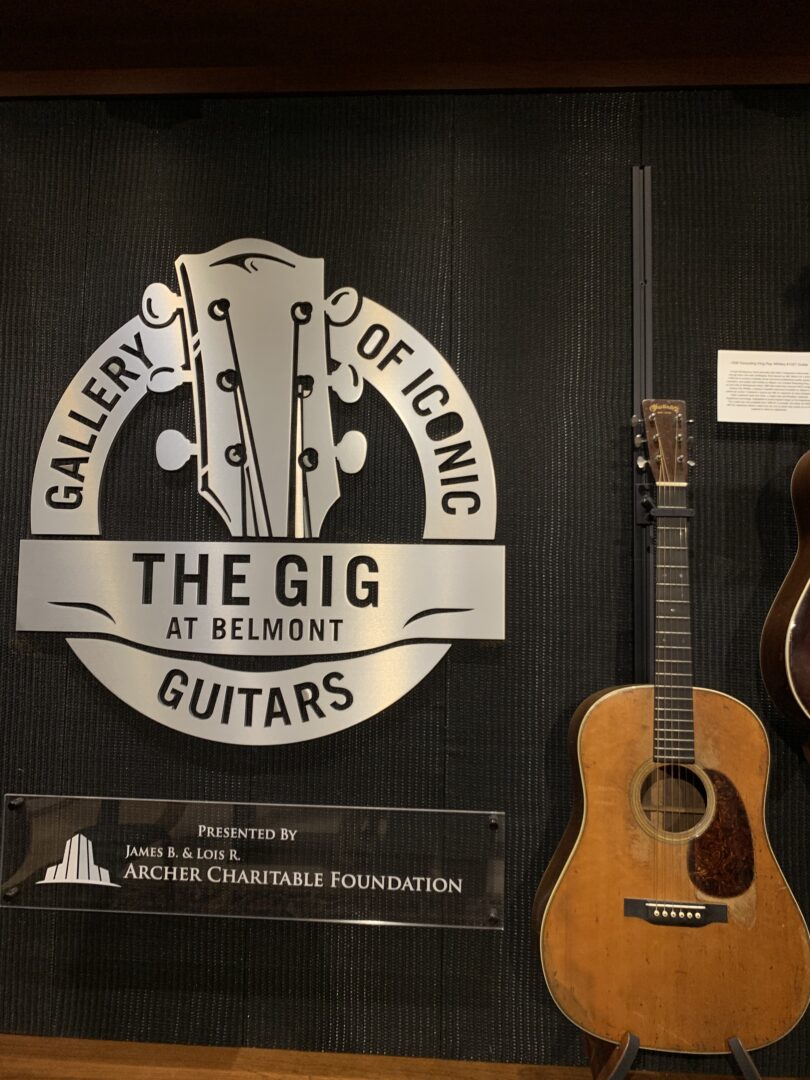
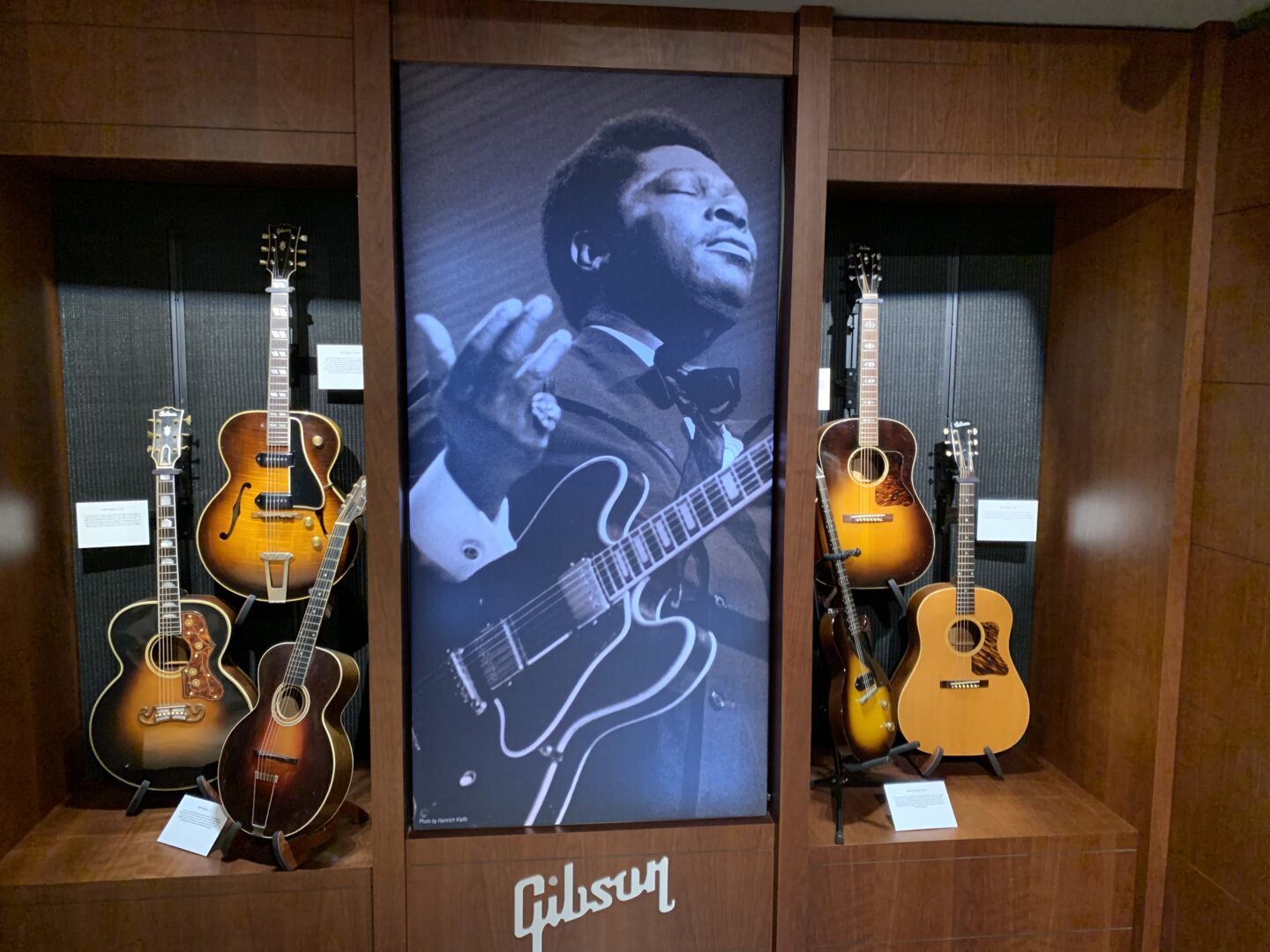
I’m in Nashville, Tennessee this weekend with many fellow Reverse Engineers. We’ve had a couple days to network and see the sights. In a minute I’m off to the Gallery of Iconic Guitars.
This is another milestone in my journey. In just a year I’ve learned how to mix and master music in a digital audio workstation (DAW) and developed my hearing and listening skills in ways I’d feared might be beyond a person my age. I’m part of a highly supportive community, dedicated to bolstering our own learning through interaction and collaboration with others. It seems quite unique in an era and industry sometimes known for cutthroat competition. I am grateful.
The Mentors of Mastering.com
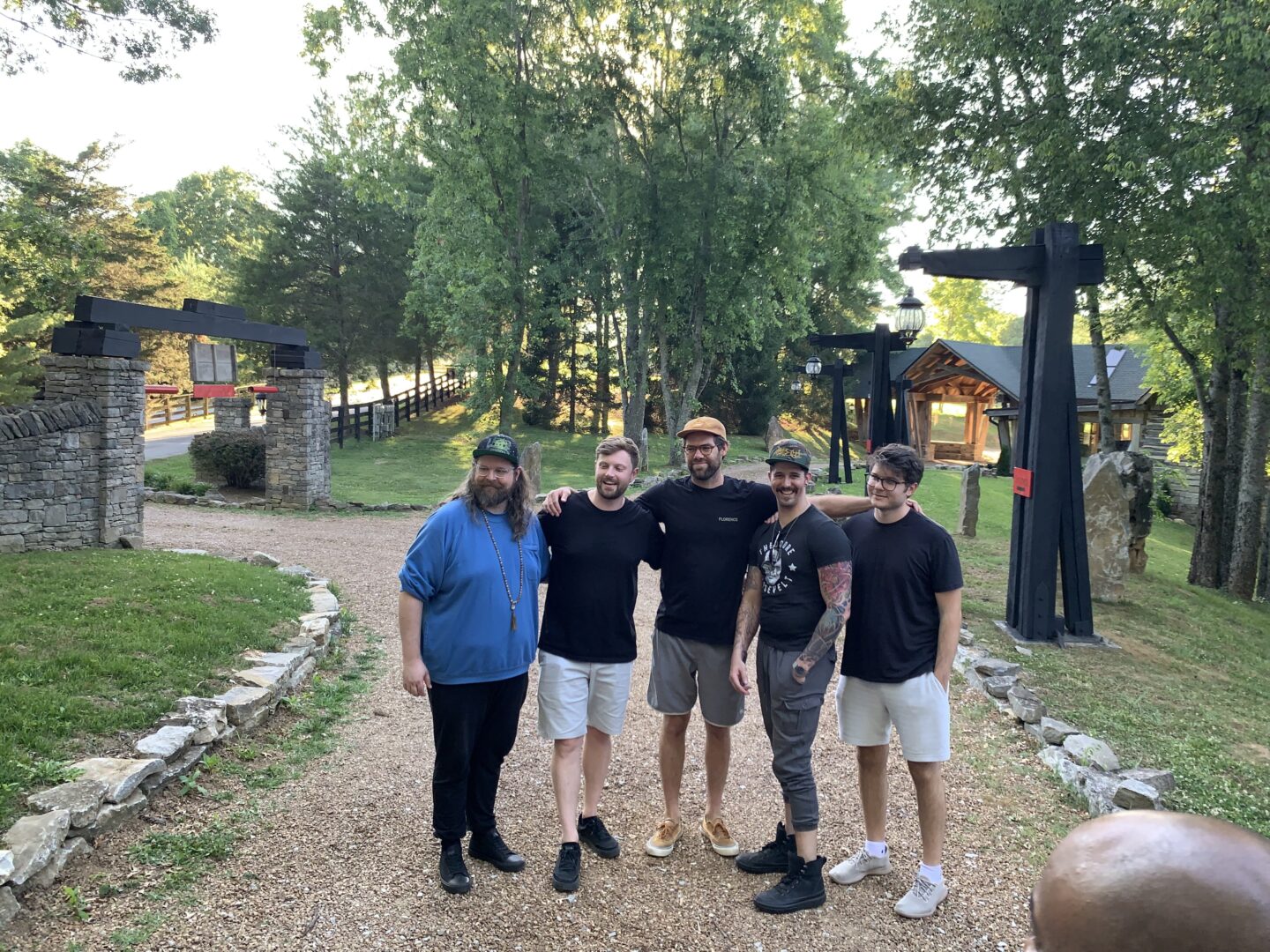
L-R: Caleb Loveless, Rob Mayzes, Dane Holmes, Jake Kodweis, Michael Gilbride
Guitar Faces, as I quip frequently, is a music blog “for the practising musician” — meaning that even before the infamous pandemic, and despite a 16-year stretch where my guitar playing paid all my bills — I’ve arrived once again at a place in my life where I do a lot more practising than performing. But I was surprised and dismayed when old foils like stage fright and writer’s block threatened to return. How could this be happening… again?
That’s when I learned about undiagnosed adult ADHD. It err, struck a chord with me. In a windmill down stroke worthy of Townsend (or Cervantes) so much of my experience attempting a career in music fell into place. Getting a grip on my innate inattention, impulsivity and hyperactivity is improving my playing.
Reinvesting in myself is the word I want to use for it, not reinventing. My spiritual quest, if you will, has always been to be the best me I can be…
Reinvesting in myself is the word I want to use for it, not reinventing. My spiritual quest has always been to be the best me I can be, which has always in some way meant being the best guitarist I can be—since I was 14. Neurofeedback, at 63, enabled me to experience meditation in ways that eluded me a lifetime. Meditation now informs my guitar practice.
Keeping a journal is a highly recommended strategy for all professionals, regardless of their place on the neurodiversity spectrum. This journal is primarily for me; you are invited to look, see and engage as much or as little as suits you. My production services will always remain competitive. My experiences and the story of my journey will always be free.
While there can be no question that the power of a shared experience with an audience is unparalleled, or that music is an essentially social phenomenon, I answer this question only after considering what it would be like for me to never play at all. It would be unbearable. And when it’s not all about getting gigs and keeping students I can play whatever I want. It’s entirely about improving my playing and my musicianship.
It’s not a good idea to never practice finishing things. A repertoire, a set list and a piece or two at the ready are important goals and benchmarks. Practice can be designed to establish and maintain these things.
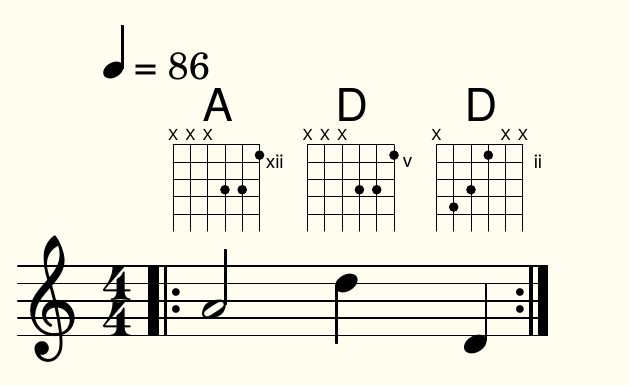
My personal form of practice has to include a significant amount of time for breathing and relaxation, especially at these early stages. I’m also a big believer in building up “practice loops,” from one or two measures to ever longer chinks. But doing just loops and never just playing a piece or song from beginning to end is no better for your musicianship than it is for the sanity of family and neighbours who may be subjected to it!
So if you’re your only audience for a while then play yourself a concert! Don’t think twice about it or let yourself feel self conscious over it. Keep your eye focused on the prize, which is improving. For any musician, improving musicianship is the most direct form of self-improvement.
Breathing and relaxation
I was always in a seated position at neurofeedback sessions, but I learned more about diaphragm breathing lying on my back. My guided meditation often suggests sitting, and letting go of breath control, but for serving the creepy crawlies of anxiety their eviction notice, it’s been my experience that some hyper-focus is in order.
“practice loops”
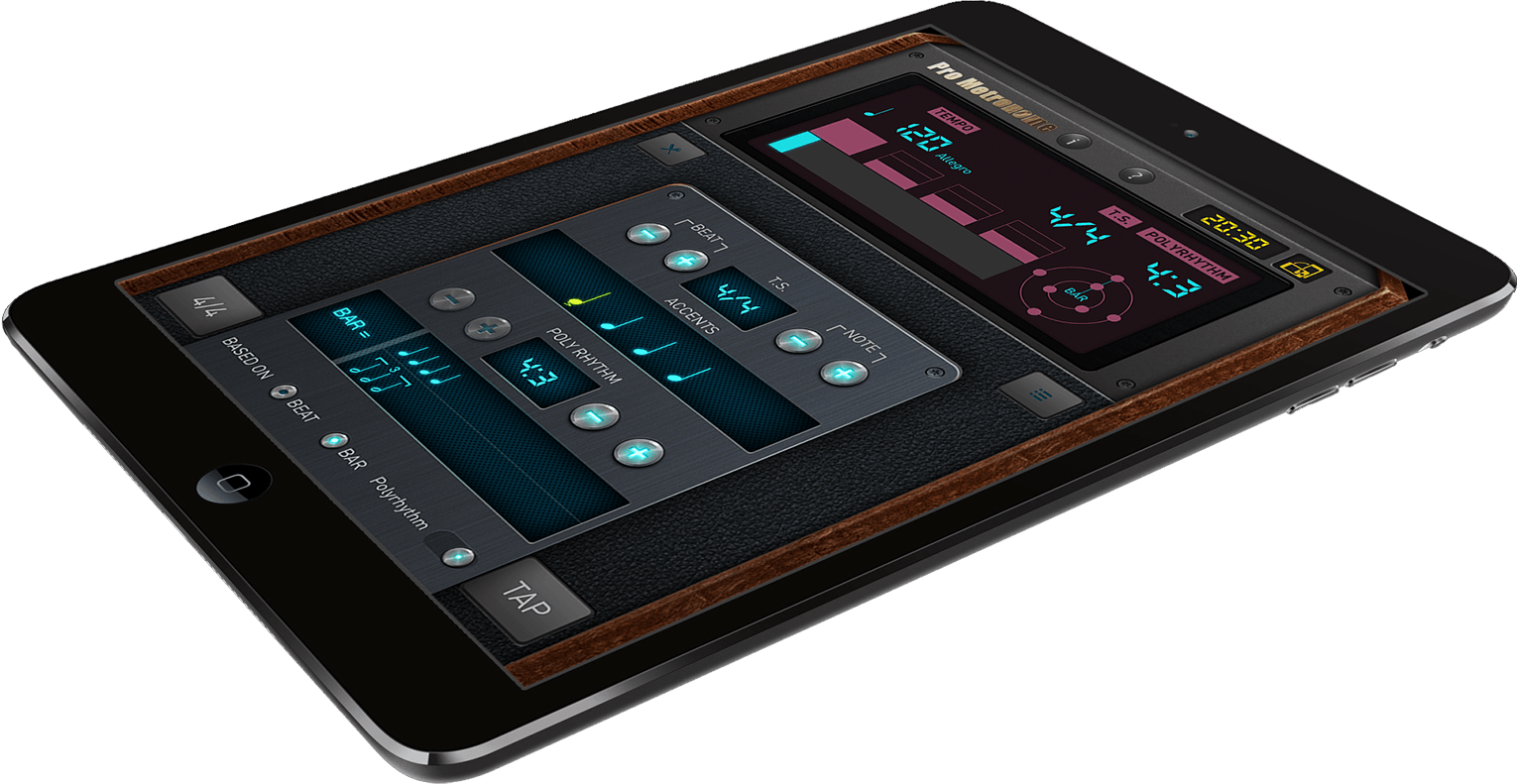
The new rule, for my ADD is: add a visual element. This can be a variety of strategies, but I like to involve reading standard notation or watching the display of my metronome, that I may from time to time set up in special ways. Technology can certainly enhance one’s ability to distill powerful knowledge from hands-on/ears-on lived experience. I use at least 3 or 4 apps regularly. My metronome, Audacity, Drum Genius, MuseScore, my DAW (Reaper), plugins within my DAW…
I’m going to just say it straight off the top: what you practice is not as important as how you practice it. Here are some basics. I’m going to elaborate on all of them, but not now.
Use a metronome or other timekeeper
I have more than one, but I haven’t always used them. I now believe in using it every time I practise, but not necessarily for the entire practice. I mainly use Pro Metronome by EUMLab.
Drum machines are also good, and I spend time with Drum Genius.
Listen carefully to the drum loop, measure its length, surf on the meter, breath and move your body following the time feel. When you feel comfortable, play or sing, trying to groove with the loop as much as you can and remember: DON’T MISS THE ONE!
This helps me focus and improves my memory. My ADD-aware approach is to look at the entire page while breathing through my nose to lower my heart rate. I try to take it in all at once, noting time and key signature, dynamics and form. My goal for reading is to hear it in pitch even without my instrument.
I’m not a fan of tablature, especially when it has no rhythm. It makes it even harder for me to follow the staves.
Scales, double stops, triad inversions
Segovia’s fingerings are awesome — but incomplete. I now try to know his fingerings, but mix and match the position changes. The Berklee two-octave scales are an important aid in this. Segovia gives you 3 or 4 fingerings that work for all major and melodic minor scales in all 24 keys. The classic melodic minor scale’s descending form is the natural minor.
The 7th mode of the jazz melodic minor, also known as “the altered scale,” is an important one Segovia skipped. The first 4 notes are a diminished scale, and the next 4 are a whole tone scale.
I’ve done fingerings based on Segovia’s and Berklee’s (William G. Leavitt’s) for all the church modes, which I’ll post here eventually.
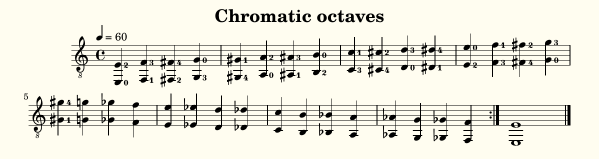
Thirds, sixths and tenths are the obvious double-stops to begin with, and chromatic octaves. This chromatic octave exercise is often the first thing I do when I pick up the nylon string guitar.
Do these slowly and deliberately, each note equal volume
Relax
Breathe. Meditate. Seriously — practice can be a form of meditation. For me it has to remain mindful. I support The Medito Foundation and I use their app for guided meditation.