
Miriam Makeba did not make this song famous internationally. The Tokens did, in 1961. Its origins lie with South African Zulu musician Solomon Linda and The Evening Birds’ “Mbube,” in 1939. Moreover, the song’s history is actually a case study in cultural appropriation and exploitation, which later became a political issue in its own right.
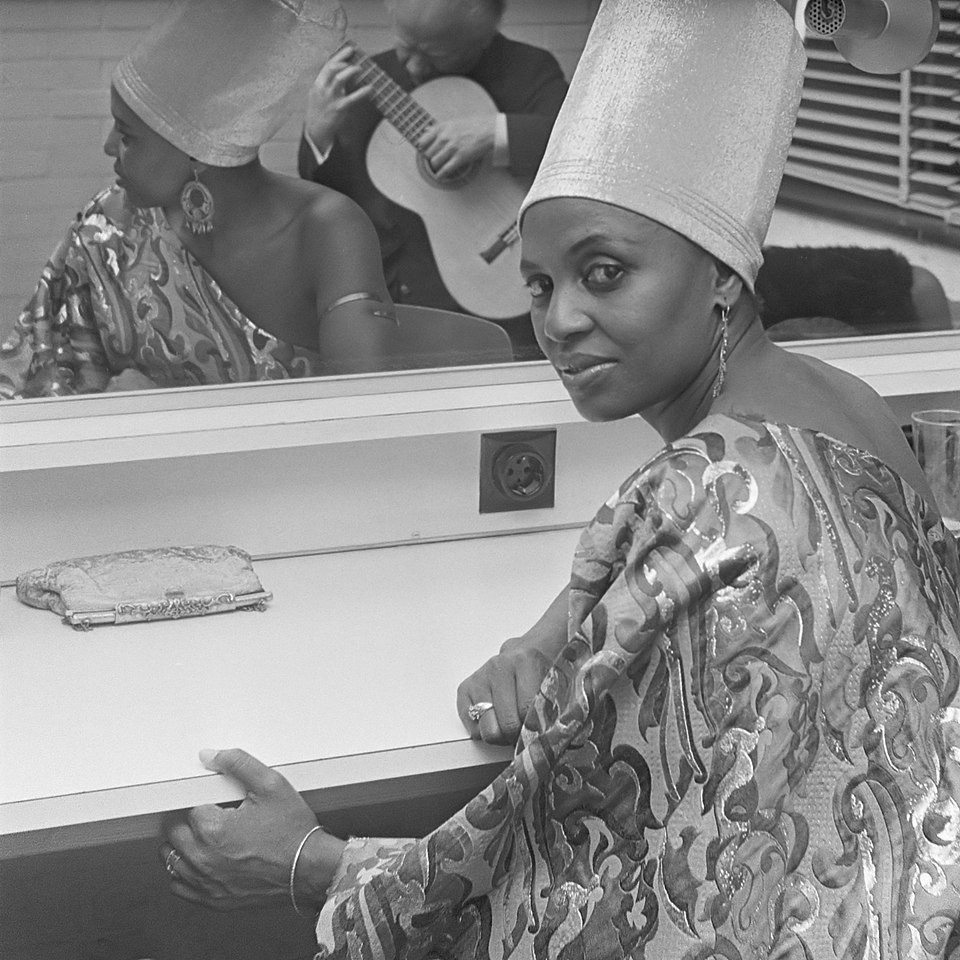
Public Domain Dedication (CC0)
But if The Lion Sleeps Tonight is the Miriam Makeba you know best, it’s understandable. And yet—it’s diametrically opposed to her importance, as an artist and as a South African.
A witness in exile
Miriam Makeba’s singing often functions like testimony rather than persuasion. She was apartheid’s witness in exile, attesting to its horrors, her words and music censored at home—her songs functioning as deposition rather than slogan. Once you see that, she’s impossible to misfile as merely “world music” — or 60’s nostalgia.
Life-risking testimony — not mere metaphor
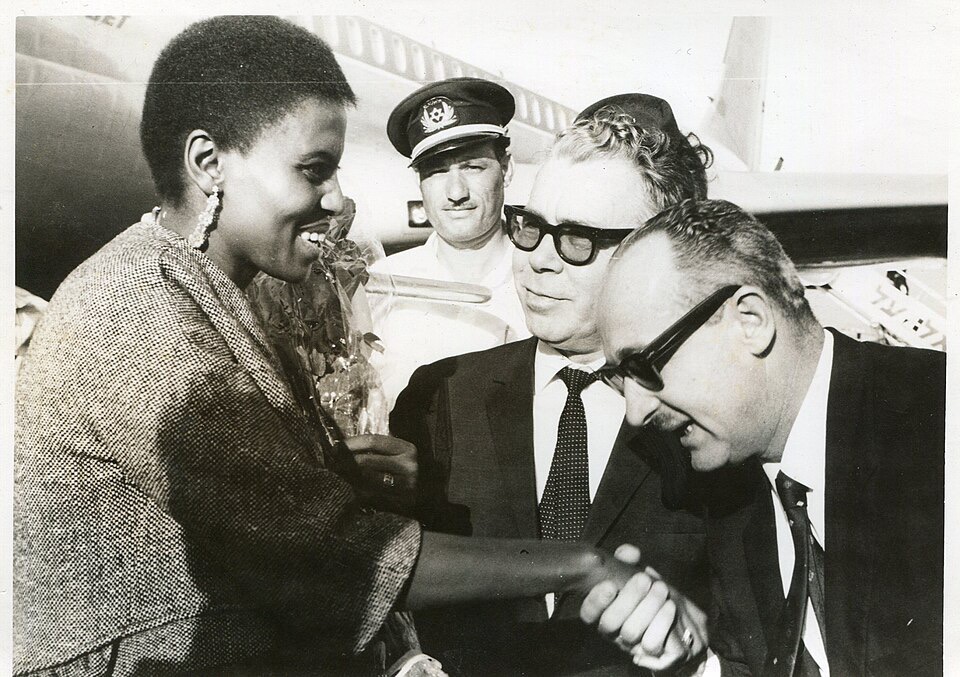
welcome Miriam to Israel (1963) Public Domain Dedication (CC0)
Miriam Makeba, Hugh Masekela, and others understood singing as life-risking testimony, not metaphor. To get to know the true Miriam, a rewarding next step is to listen to “Soweto Blues” and “Ndodemnyama” back-to-back, paying attention not just to lyrics but to delivery—how restraint itself becomes political. That’s where her power lives.
Hamba kahle, Miriam. Lala ngamandla, Miriam! Go well!
Pumzika kwa heshima — na nguvu, Miriam! Rest with dignity — and with power!
§
Leave a Reply